
2026.03.21
愛知県岡崎市 三浦太鼓店とは

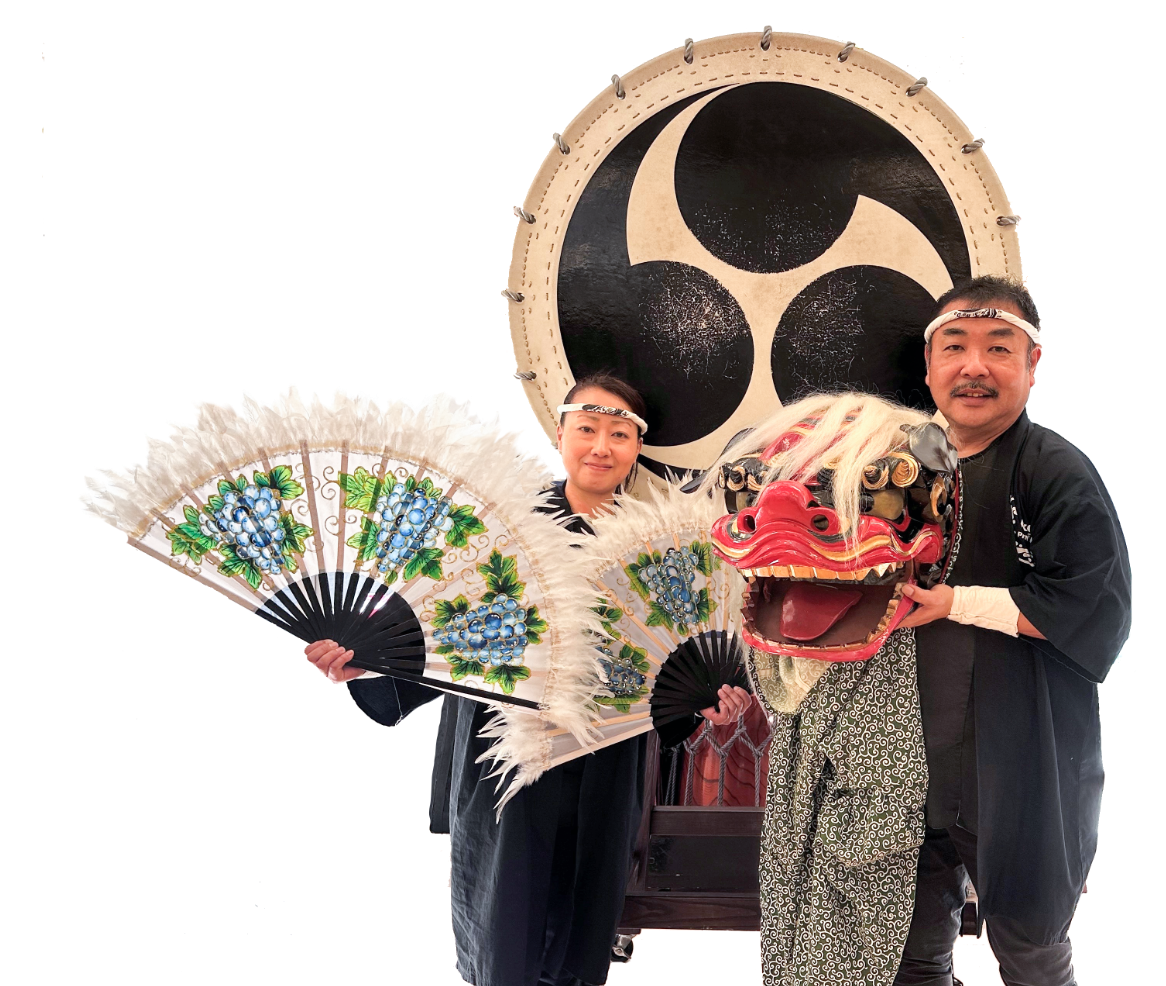
先日KDSスタジオに、三浦太鼓店 製 三・六尺
の大太鼓が納品された。
製作を手がけたのは、六代目彌一・三浦和也氏。
渡邊とは長きにわたり信頼関係を築いてきた間柄であり、互いに音を通して向き合ってき
た同志でもある。
今回、スタジオオープンという新たな門出に合わせ、この大太鼓を納品していただいた
ことは、単なる楽器の導入ではない。
それは、これから生まれる音、育まれる人、築かれていく歴史への期待と祈りが込められ
た贈り物である。
三・六尺の大太鼓は、その堂々たる存在感と圧倒的な響きで、空間の中心となる。
一打は床を震わせ、空気を揺らし、打つ者の覚悟を映し出す。
この太鼓とともに、KDSスタジオは新たな一歩を踏み出す。
その節目に力を貸してくださった三浦和也氏に、心からの敬意と感謝を捧げたい。
まさに、深い信頼の上に生まれた一張である。
ここで三浦太鼓店を紹介したい。
三浦太鼓店 六代目彌一・三浦和也 のものづくりは、「音は素材と時間が育てる」という信念に貫かれている。
欅をはじめとする良材を厳選し、十分な年月をかけて乾燥させ、丸太をくり抜く伝統製法によって胴を成形する。厚みは均一ではなく、音の抜けや響きの広がりを計算しながら削り出される。革張りにおいても、その日の湿度や気温を見極め、張力は数値ではなく実際の音で判断する。
すべては、一打目の立ち上がりから余韻の伸び、倍音のまとまりに至るまで、理想の響きを実現するためである。
その思想を象徴する太鼓が、味噌六太鼓 である。味噌六太鼓の由来は、愛知県岡崎で江戸時代から続く八丁味噌の木桶にある。カクキュー八丁味噌 や まるや八丁味噌 などで用いられてきた味噌樽は、長年にわたり発酵の圧力と湿度に耐え、内部まで締まりきった状態に熟成された木材である。その樽を太鼓の胴として再生したことが、味噌六太鼓の始まりと伝えられている。
長い時間を重ねた木が持つ粘りと安定感は、深く太い響きを生み出す。それは単なる音量ではなく、空間を包み込むような重厚さであり、舞台において確かな存在感を放つ音である。
さらに鼓面には、徳川家康 公の葵の御紋が描かれている。家康公が掲げた「天下泰平」の理念、戦乱の世を終わらせ、平和と秩序を築くという志。その象徴が、この太鼓に刻まれている。長い年月を経て熟成された樽が新たな命を得て響くように、味噌六太鼓は時間の重みと安定の力を音として体現する。
作って終わりではなく、鳴らされて完成する楽器。伝統を守りながらも現代の舞台音響に応える革新を忘れない姿勢。そのすべてが融合し、味噌六太鼓は誕生している。
それは単なる楽器ではない。
ものづくりにこだわりを持つ者の時間、思想、祈りが宿る太鼓である。

三浦太鼓店 (Okazaki, Aichi Prefecture)
Miura Taiko Shop, located in Okazaki City, Aichi Prefecture, is a distinguished maker of traditional Japanese taiko drums. Under the inherited name “Yaichi,” passed down through generations, the workshop has upheld uncompromising craftsmanship—from the careful selection of materials to the final finishing touches.
Today, this legacy is carried forward by Sixth-Generation Yaichi, 三浦和也.
Sound Is Cultivated by Material and Time
Miura Taiko Shop, located in Okazaki City, Aichi Prefecture, is a distinguished maker of traditional Japanese taiko drums. Under the inherited name “Yaichi,” passed down through generations, the workshop has upheld uncompromising craftsmanship—from the careful selection of materials to the final finishing touches.
Kazuya Miura’s craftsmanship is grounded in one unwavering belief:
“Sound is nurtured by material and time.”
Premium woods such as Japanese zelkova (keyaki) are meticulously selected and naturally dried over many years. The drum body is then shaped using the traditional method of hollowing out a single solid log.
The thickness of the shell is not uniform. Each drum is carved while calculating tonal projection, resonance, and the expansion of sound.
Even in the process of stretching the drumhead, humidity and temperature on that particular day are carefully considered. Tension is determined not by numbers, but by listening to the actual sound produced.
Everything is done in pursuit of the ideal tone—from the sharp clarity of the first strike, to the lingering sustain, and the cohesion of overtones that fill the space.